


Airlines Move Fast to Capture Displaced Spirit Customers — But the Real Strategy Runs Deeper

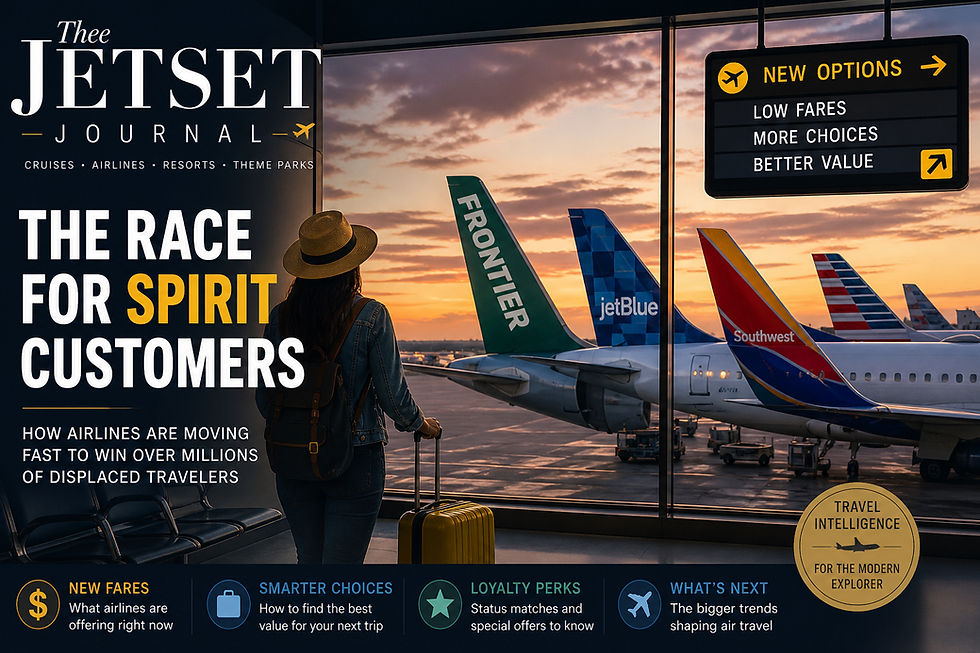
The sudden collapse of a major ultra-low-cost carrier doesn’t just leave empty gates—it creates a rare opening in one of the most competitive industries on the planet. With Spirit Airlines exiting the market, airlines across the spectrum—from bare-bones discounters to full-service legacy giants—are moving quickly to absorb millions of price-sensitive travelers who now need alternatives.
But this moment isn’t just about filling seats—it’s about recalibrating expectations. Spirit’s customer base wasn’t simply large; it was distinct. These were travelers who understood the trade-offs, who knew exactly what they were giving up in exchange for a cheaper ticket—and were perfectly fine with it.
Now the industry is facing a more complicated question: can you win those customers without becoming Spirit?
What’s unfolding feels less like a scramble and more like a quiet land grab—one that could reshape pricing strategies and redefine what “low cost” actually means in the U.S.
A Market Suddenly Up for Grabs
Within days of Spirit’s shutdown, the response from competitors was swift—but notably varied.
Frontier Airlines wasted no time leaning into its identity. Expect flash sales, aggressively priced routes, and a renewed push around bundled fares that echo the à la carte model Spirit flyers already understand. It’s the most obvious handoff in the market—but not necessarily a one-to-one replacement.
JetBlue Airways, on the other hand, is playing a longer game. Instead of chasing the absolute lowest fare, it’s positioning itself as the “next step up”—rolling out status matches, limited-time credits, and just enough incentive to nudge former Spirit travelers toward a more comfortable experience.
The legacy carriers—American Airlines, Delta Air Lines, and United Airlines—are being more subtle about it. No splashy campaigns, no direct appeals. Instead, they’re adjusting where it matters: capacity, schedules, and pricing on routes Spirit once dominated.
And then there’s Southwest Airlines, which doesn’t need to change much at all. Its pitch—bags included, fewer surprise fees—suddenly lands a bit differently in a post-Spirit landscape.
This Isn’t the First Disruption—But It’s a Meaningful One
Airline shakeups aren’t new. The industry has seen its share of collapses, restructurings, and sudden exits. But Spirit’s role in the U.S. market makes this one feel more consequential.
When carriers like WOW Air or Air Berlin disappeared, the impact—while significant—was more contained. Spirit is different. It didn’t just operate within the system; it helped reshape it.
For more than a decade, it normalized a certain kind of flying: ultra-cheap base fares paired with a menu of add-ons. That model didn’t just influence competitors—it forced them to respond. Basic economy, for example, is in many ways a legacy carrier’s answer to Spirit.
Now that pressure point is gone. At least for the moment.
The question isn’t just whether fares will rise—it’s how airlines preserve the demand Spirit created without inheriting the parts of its model that proved difficult to sustain.
Why This Is Really Happening
Airlines aren’t simply chasing former Spirit passengers—they’re chasing what those passengers represent.
This is a group that behaves differently. They’re flexible. Price-driven. Often willing to shift travel dates, airports, even destinations if the fare is right. That kind of demand is incredibly useful—especially for filling flights that might otherwise leave with empty seats.
Here’s the part you don’t usually hear: airlines rely on a delicate balance. High-paying passengers drive margins, but volume keeps the network running efficiently. Spirit was exceptionally good at delivering that volume.
Now, airlines are trying to absorb it—without disrupting their own ecosystems.
That’s why the strategies look so different. Frontier is leaning into price. JetBlue is leaning into conversion—turning budget travelers into repeat customers. Legacy carriers are, as usual, playing the long game, adjusting supply rather than messaging.
There’s also a timing element that matters. Aircraft deliveries are delayed. Labor constraints haven’t fully eased. Fuel costs remain unpredictable. In other words, airlines can’t just flood the market with new flights—they have to be precise.
And moments like this—where millions of customers are suddenly in play—don’t come around often.
What This Means for Travelers
The immediate impact depends on how you used Spirit—and how flexible you’re willing to be now.
If you were flying purely for price, the landscape is tighter. Those ultra-low, headline-grabbing fares will be harder to find consistently. Frontier will carry some of that weight, but not everywhere, and not always at the same scale.
If you were already inching toward a bit more comfort, this shift might actually work in your favor. Airlines like JetBlue and Southwest are making a stronger case than they used to, and the price gap—once significant—has narrowed in many markets.
Route availability is where things get more complicated. Spirit served a mix of high-demand leisure routes and less obvious city pairs that worked precisely because of its cost structure. Some of those routes may not survive in the same form.
There’s also a subtle change in how pricing is presented. Fees aren’t disappearing—but they’re being reframed. Bundles, fare tiers, and “included” perks are doing more of the heavy lifting, even if the math behind them hasn’t changed much.
What Travelers Should Do Next
This is one of those moments where being a passive traveler doesn’t quite work.
Start by widening your search. If you were loyal to Spirit out of habit, it’s worth rechecking assumptions. The cheapest option isn’t always where you expect it to be right now.
Consider engaging with loyalty programs—even casually. Airlines are actively trying to convert new customers, and the short-term incentives are better than usual. You don’t need to go all-in, but ignoring those offers might mean leaving value on the table.
Booking earlier is also becoming more important, especially for peak routes. The days of consistently finding last-minute deals at Spirit-style prices are, at least for now, fading.
Flexibility helps more than ever—different airports, off-peak times, even shifting your trip by a day or two can still unlock meaningful savings.
And perhaps most importantly: look at the total cost, not just the headline fare. That calculation has always mattered—but it matters more now.
The Bigger Trend Behind This Shift
Step back, and this isn’t just about one airline disappearing. It’s about a model evolving.
For years, the industry had relatively clear categories: ultra-low-cost, low-cost, full-service. Those lines have been blurring for a while, but this moment accelerates that shift.
Legacy airlines now offer stripped-down fares. Low-cost carriers are layering in premium options. Even the most budget-focused airlines are experimenting with bundles that look increasingly familiar.
The result is a market that feels less segmented—and more nuanced.
Ancillary revenue remains central to all of it. Spirit may have been the most visible example, but every airline is refining how it sells extras, packages value, and nudges customers toward higher spend.
Geography is shifting too. Airlines are becoming more selective about where they compete aggressively on price. Leisure-heavy markets will stay competitive, but smaller cities may feel the pullback.
And then there’s the longer-term question: what do travelers expect now? Spirit set a baseline—low fares, minimal frills, clear trade-offs. Without it, the industry has some room to reset that equation.
Where Former Spirit Flyers May Land
Frontier Airlines: Still the closest match on price, though the experience isn’t identical
JetBlue Airways: A natural “step up” for those willing to spend slightly more
Southwest Airlines: Appeals on simplicity—especially with baggage included
Legacy carriers: More competitive than they appear, particularly on key routes
There’s no clean replacement—and that’s by design.
Conclusion: A Reset, Not a Replacement
Spirit Airlines didn’t just disappear—it left a gap that the industry isn’t trying to fill with a single answer.
Instead, airlines are dividing up the opportunity. Some are chasing the lowest end of the market, others are trying to convert those travelers into something more valuable over time.
For travelers, that means adjusting expectations—and paying a bit more attention when booking.
The ultra-low-cost model isn’t gone. But it’s no longer anchored by a single, defining player. And that alone changes how the entire system behaves.


Comments