


The Smart Traveler’s Guide to Airport Lounges—Without Overspending

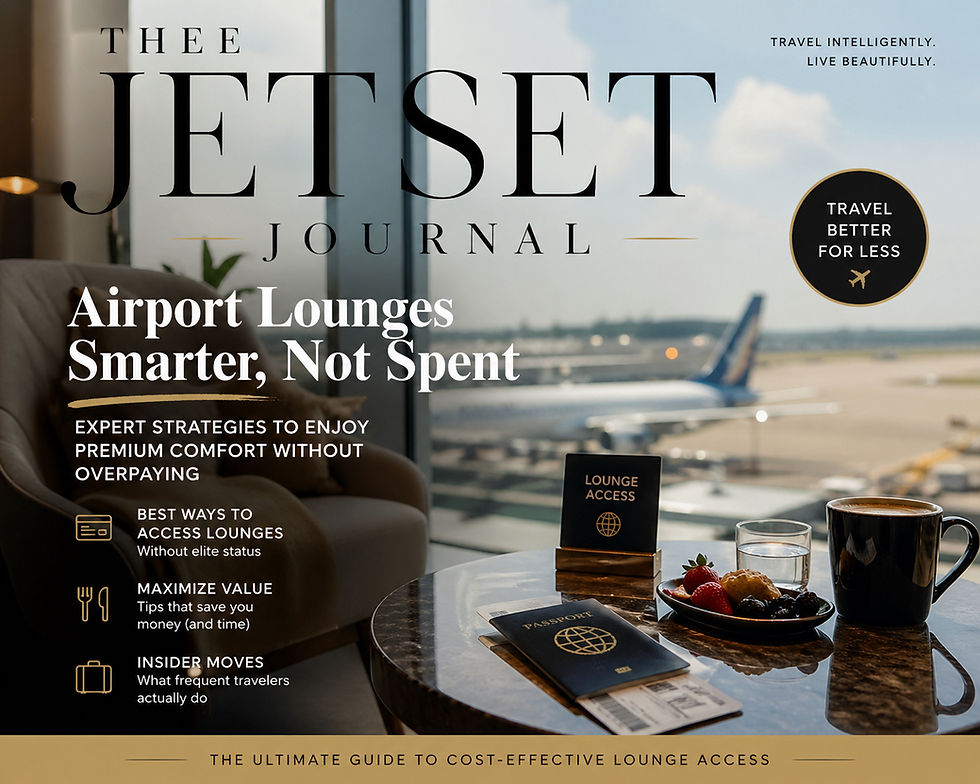
Airport lounges have quietly evolved. What used to feel like a splurge reserved for business class passengers is now—if you play it right—more of a calculated upgrade than a luxury.
And yet, most travelers still get it wrong. They either overpay for a one-time pass out of desperation or assume lounge access is out of reach unless they’re flying premium. Neither is true.
The real advantage comes from understanding when lounges are actually worth it—and how to access them in ways that make financial sense. Done strategically, you can turn a chaotic airport experience into something far more controlled…without spending much more than you already would.
Key Strategies for Cost-Effective Lounge Access
1. Rethink the “One-Time Pass” Habit
It’s tempting. You’re at the airport, the gate area is crowded, and a lounge agent offers access for $60. In the moment, it feels justified.
But zoom out a bit.
That same $60 often covers:
A decent meal
A drink or two
A quieter place to sit
The issue isn’t the value of a single visit—it’s how quickly that habit adds up. Two or three of those in a year, and you’ve already crossed into “there was a better way to do this” territory.
If you’re flying more than a couple times annually, it’s worth stepping back and choosing a more consistent access strategy.
2.Priority Pass Is Useful—But Only If You’re Intentional
Priority Pass gets talked about like a universal solution. It’s not. On its own, the math can feel underwhelming.
Where it does shine is when it’s bundled into a credit card you’re already considering. That’s when the equation shifts.
Picture this:
A handful of lounge visits per year
No per-visit mental math
Occasional restaurant credits in airports where lounges are underwhelming
Those dining credits, by the way, are the quiet standout. In some airports, skipping a crowded lounge and using a $28 credit at a solid restaurant is the better move.
It’s less about having access—and more about knowing when not to use it.
3. Be Selective With Day Passes
Day passes aren’t inherently bad. They’re just situational.
Some lounges—particularly those run by groups like Plaza Premium Group—offer a noticeably better experience than others, and access can be surprisingly flexible outside peak hours.
But this only really works in your favor under the right conditions:
A longer layover where you’ll actually settle in
Limited or overpriced food options nearby
A real need for quiet or a place to work
Otherwise, you’re paying for potential you won’t fully use. And that’s where the value starts to slip.
4. Occasionally Upgrade Your Flight Instead
This is the part most travelers overlook.
Rather than piecing together lounge access separately, there are times when upgrading your ticket—yes, actually paying more upfront—ends up being the more efficient play.
Not always. But often enough.
If the gap between economy and business class is relatively narrow, you’re not just buying a better seat. You’re bundling:
Lounge access
Better onboard meals
Fewer out-of-pocket airport expenses
A noticeably smoother airport experience overall
In some cases, once you account for what you would have spent anyway, the difference isn’t as dramatic as it first appears.
5. Think in Terms of Alliances, Not Airlines
Loyalty to a single airline only gets you so far.
The smarter approach is to think in terms of alliances—groups like Star Alliance, Oneworld, and SkyTeam.
Once you start booking within the same alliance, your access expands quietly in the background. A single qualifying ticket or status tier can unlock lounges across multiple carriers, often in different countries.
It’s one of those shifts that doesn’t feel significant at first—until you realize how much more consistent your airport experience becomes.
6. Timing Matters More Than You Think
Not all lounge visits are created equal.
Walk in at the wrong time—say, peak morning rush—and you might find yourself circling for a seat with a plate of scrambled eggs that’s been sitting out too long.
Come in closer to a meal transition, though, and it’s a different experience entirely.
There’s a rhythm to it:
Late breakfast sliding into lunch
Early evening setups before dinner
Quieter windows in between departure waves
A shorter, well-timed visit often delivers more value than lingering for hours just because you can.
7. Watch for Overlapping Credit Card Perks
This one catches people off guard.
It’s easy to end up with multiple cards offering similar lounge benefits—each with its own annual fee—without actually increasing how much you use them.
At that point, you’re not optimizing access. You’re just duplicating it.
A cleaner approach:
Pick one primary method (usually tied to a card), then fill in the gaps with occasional passes or strategic upgrades when needed.
8. Look Beyond the Usual Programs
Priority Pass tends to dominate the conversation, but it’s not the only option.
Programs like LoungeKey and DragonPass sometimes offer access to different lounges—or better pricing depending on where you’re traveling.
If you fly internationally with any frequency, it’s worth knowing what’s available beyond the default.
9. Don’t Overlook Arrival Lounges
Most people focus entirely on departure. That’s understandable—but it’s also a missed opportunity.
Arrival lounges can be surprisingly useful, especially after a long-haul flight.
A quick shower, a decent breakfast, a quiet place to reset before heading into the city—it can change how the entire first day of your trip unfolds.
Airlines like British Airways and Emirates have leaned into this concept, and when it’s available, it’s often worth factoring into your planning.
Common Mistakes to Avoid
Paying for lounge access during a tight connection is probably the most common misstep. You end up rushing through the experience, barely settling in, and wondering what you actually paid for.
There’s also the assumption that every lounge will feel premium. Some don’t. Overcrowding, limited food, and inconsistent quality are very real issues—especially at peak times.
And then there’s the tendency to overvalue certain perks. Free drinks sound great, but if that’s the main justification, the math doesn’t always hold up.
A little research ahead of time—what’s available, how busy it gets, what’s actually included—goes a long way.
When It’s Worth Spending More
There are moments when the decision becomes easy.
Long delays, for one. What feels like an unnecessary expense at first quickly turns into a sanity-saving upgrade when you’re stuck in the airport for hours.
The same goes for overnight flights. Having a calm space beforehand—somewhere to eat properly, recharge, maybe even shower—can make a noticeable difference once you’re in the air.
And in certain airports, the alternative simply isn’t great. Limited seating, few quality food options, constant noise. In those cases, the lounge isn’t just better—it’s the only comfortable option.
Who This Strategy Works Best For
If you travel a few times a year, especially on longer or international routes, you’ll start to see the benefits quickly.
Frequent leisure travelers tend to get the most out of bundled access. International travelers benefit from alliance networks more than they expect. And if you ever find yourself working between flights, lounges can double as surprisingly functional workspaces.
It’s less about how often you travel—and more about how intentionally you plan around it.
The Bottom Line
Airport lounges aren’t inherently expensive. They just reward a bit of strategy.
The travelers who get the most value aren’t the ones chasing access at every opportunity. They’re the ones who understand when it matters—and when it doesn’t.
A well-timed visit. The right access method. A willingness to think beyond the obvious.
That’s really the difference.


Comments