


Royal Caribbean’s Pizza Delivery Robots Signal a Bigger Shift at Sea

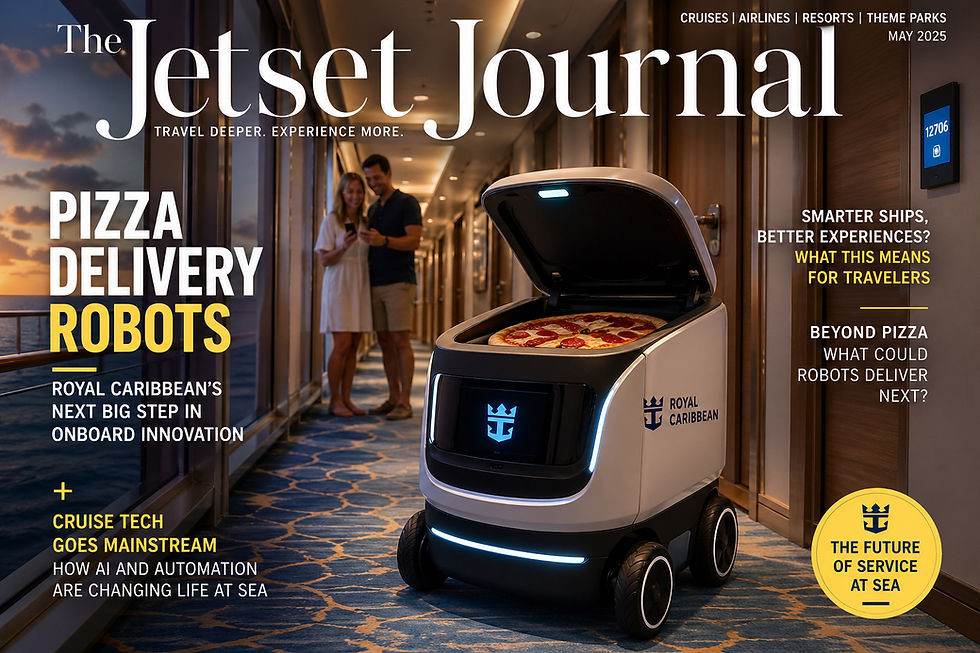
A Small Slice of Automation With Big Implications
At first glance, it’s easy to dismiss this as cruise ship gimmickry: a little robot rolling down a corridor with a late-night pizza. The kind of thing you film once, post, and forget about.
But Royal Caribbean International isn’t in the business of adding novelty for novelty’s sake—especially not now. The timing here matters. Behind the scenes, cruise lines are still recalibrating how they operate after a turbulent few years, and the pressure to do more with less hasn’t eased.
That’s what makes this experiment worth paying attention to. It’s not really about pizza. It’s about how service at sea is quietly being reengineered—one operational pain point at a time.
What Royal Caribbean Is Actually Testing
The concept itself is straightforward. Royal Caribbean is testing compact delivery robots that can transport food—starting with pizza—from onboard kitchens directly to guests.
Here’s how it plays out:
You place an order in the app
A crew member loads it into a robot
The robot makes its way across the ship
You get a notification and unlock it when it arrives
Simple on paper. Slightly more impressive when you remember these ships are essentially floating cities.
The focus on pizza isn’t random, either. On ships like Icon of the Seas or Wonder of the Seas, late-night pizza orders pile up quickly—especially after shows, bars close, or casinos wind down. It’s one of the few food categories that sees consistent demand deep into the night.
And that’s exactly when staffing is thinnest.
This Didn’t Come Out of Nowhere
If you’ve sailed with Royal Caribbean recently, none of this should feel entirely surprising.
The company has been layering in tech for years—sometimes subtly, sometimes not. Mobile apps replaced paper planners. RFID wristbands streamlined purchases. Even robotic bartenders made their debut long before most guests fully processed what that meant.
Other cruise lines have taken slightly different paths. MSC Cruises leaned into in-cabin voice assistants, while Carnival Cruise Line focused more on app-driven efficiency and behind-the-scenes systems.
What’s different here is the visibility. A robot delivering your food is hard to ignore. It turns a back-end efficiency play into something guests directly experience.
Why This Is Really Happening
The official line will center on convenience—and yes, this will make things easier for guests. But that’s not the full story.
Crew logistics are still complicated. Hiring hasn’t fully normalized, and costs have climbed. At the same time, ships keep getting bigger, which stretches staff across longer distances and more venues.
Now layer in guest behavior. People don’t just want room service—they expect it to be fast, trackable, and frictionless. That expectation doesn’t come from cruising; it comes from everyday life on land.
Here’s where it gets interesting: late-night delivery is one of the least efficient services onboard. Long walks, unpredictable timing, low staffing. It’s not broken, exactly—but it’s not scalable.
Robots change that math.
And there’s a quiet revenue play here, too. If delivery becomes easier and faster, people use it more. Once usage goes up, it becomes easier to justify charging for it—or expanding premium options.
What This Means for Travelers
For most passengers, the shift won’t feel dramatic at first. But over time, you’ll notice the difference.
More Consistency, Less Guesswork
Late-night orders have historically been a gamble. This should smooth that out.
Gradual Menu Expansion
Pizza is just the starting point. If this works, expect snacks, casual dining items, maybe even drinks to follow.
A Slight Shift in Atmosphere
This is where opinions will split. Some guests will love the efficiency. Others may miss the human interaction, especially on a cruise where service is part of the experience.
Don’t Rule Out Fees
Here’s the part cruise lines won’t highlight upfront: once a service becomes reliable and scalable, it often becomes monetizable.
What Travelers Should Do Next
You don’t need to rethink your cruise because of this—but you can use it to your advantage.
Get Comfortable With the App Early
If you wait until midnight on day three to figure it out, you’re already behind.
Time Your Orders Thoughtfully
Even with automation, demand spikes still matter. Ordering just before the rush can make a noticeable difference.
Location Still Counts
Cabins near central zones or elevator banks may see quicker deliveries, especially while the system is being fine-tuned.
Keep Expectations Flexible
Early rollouts are rarely perfect. There may be delays, glitches, or limited availability at first.
The Bigger Trend Behind This Shift
Zoom out, and this starts to look less like a quirky experiment and more like a blueprint.
Cruise ships are getting larger. Operating costs aren’t going down. And guest expectations—especially around speed and convenience—are only going in one direction.
Something has to bridge that gap.
We’re already seeing it across travel: hotels experimenting with delivery robots, airports automating routine tasks, theme parks using technology to manage crowds more precisely.
Cruising is simply catching up—but doing it in a way that’s highly visible.
And here’s the nuance: this isn’t about replacing crew. It’s about using them differently. The repetitive, time-consuming tasks are the easiest to automate. The goal—at least in theory—is to free up staff for the interactions that actually define the onboard experience.
A Quick Comparison: Who Else Might Follow?
It’s hard to imagine this staying unique to Royal Caribbean for long.
Norwegian Cruise Line already leans into flexible dining and app-based ordering, making it a natural candidate for something similar.
Disney Cruise Line may take a more cautious approach. Their brand leans heavily on personal interaction, and any move toward automation would need to feel seamless—almost invisible.
That divide may ultimately define the industry: efficiency-driven innovation on one side, high-touch service on the other.
A Glimpse of the Future, Delivered in a Pizza Box
It’s tempting to view pizza delivery robots as a novelty. And for some guests, that’s exactly what they’ll be.
But step back, and it’s clear this is part of something bigger. Cruise lines are rethinking how service works—not just how it feels, but how it functions behind the scenes.
If Royal Caribbean gets this balance right, most guests won’t think twice about the technology. They’ll just notice that things arrive faster, more reliably, with less friction.
And that, more than the robot itself, is the real story.


Comments