


Disney Cruise Line’s New Magnet Policy Signals a Bigger Shift in Guest Behavior at Sea

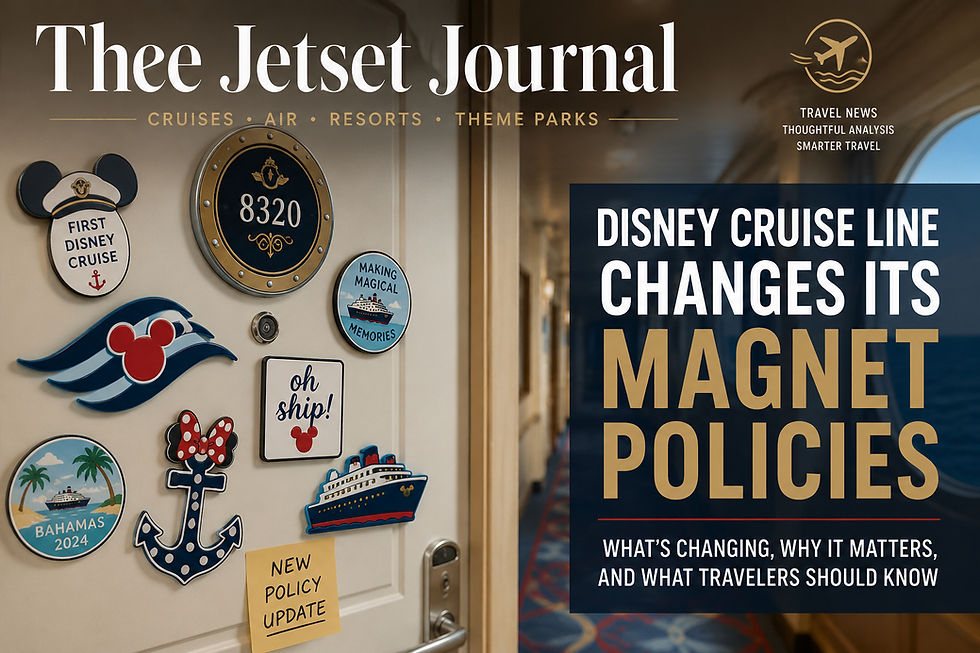
For many Disney Cruise Line fans, decorating a stateroom door has become almost as much a part of vacation planning as booking shore excursions or securing a dining reservation.
Weeks before embarkation, Facebook groups fill with photos of custom magnets, Etsy orders start arriving at front doors, and families put finishing touches on designs celebrating birthdays, anniversaries, first sailings, and family reunions. What began years ago as a small fan tradition evolved into one of the most recognizable parts of Disney cruise culture.
That is why Disney Cruise Line’s recent update to its magnet policy has generated far more discussion than most onboard rule changes.
On the surface, the changes appear relatively straightforward. In reality, they offer an interesting glimpse into how cruise lines are increasingly balancing guest creativity with operational realities. As ships become more crowded and guest-generated traditions grow larger, cruise operators are finding themselves forced to draw clearer lines than they once did.
News Breakdown: What Disney Changed
Disney Cruise Line has updated its guidelines regarding stateroom door decorations, including the magnets that have become a staple of many sailings.
Guests can still display magnets on cabin doors, but Disney is reinforcing limits on what types of decorations are acceptable. Items that could damage surfaces, leave residue behind, obstruct safety features, or create operational challenges for crew members are no longer permitted.
The updated guidance also reiterates that tape, glue, adhesives, and other attachment methods are prohibited. Decorations cannot block cabin numbers, peepholes, emergency information, or areas that crew members may need to access while servicing staterooms.
For many cruisers, particularly those using simple magnetic decorations, the policy change may not require any adjustments at all.
Others may find that some of the elaborate door displays that have become increasingly popular over the past several years now fall outside Disney’s comfort zone.
A Tradition That Grew Bigger Than Anyone Expected
Disney’s magnet culture developed organically.
Families discovered that decorated doors helped children find their cabins more easily. Guests began creating magnets for special occasions. Social media amplified the trend, and before long entire communities emerged around designing, trading, and displaying custom artwork during sailings.
Some passengers now coordinate decorations across multiple cabins. Others participate in magnet exchanges or create personalized sets unique to a specific itinerary.
The creativity has been impressive.
But like many guest-created traditions, success eventually creates new challenges.
What started as a few magnets on a door gradually evolved into large multi-piece displays, layered decorations, hanging elements, and increasingly elaborate installations that sometimes extended well beyond the original spirit of the tradition.
That’s often the point where cruise lines step in.
How This Compares to the Past
Technically speaking, Disney has always maintained rules regarding stateroom decorations.
The difference is that many guests rarely paid much attention to them.
Over the years, enforcement often appeared relaxed, and travelers generally operated under the assumption that if a decoration stayed attached to the door and didn’t bother anyone, it would likely be allowed.
Meanwhile, social media pushed the trend further.
Scroll through cruise Facebook groups today and you’ll find door displays that look more like temporary art exhibits than simple cabin markers. Some are professionally printed. Others incorporate multiple materials, layered construction, or decorative accessories that go far beyond basic magnets.
Disney’s updated language feels less like a brand-new policy and more like an effort to bring actual guest behavior back in line with rules that already existed.
Why This Is Really Happening
Disney’s public explanation focuses on safety, maintenance, and preserving the guest experience.
Those reasons are certainly valid.
Crew members regularly encounter decorations that leave residue behind, damage finishes, or create extra work during turnaround days. Even small issues become significant when multiplied across thousands of passengers.
But there are larger forces at work here.
The cruise industry is operating in an era of exceptionally strong demand. Disney ships are sailing full, new vessels are entering the fleet, and operational efficiency has become increasingly important across the business.
When occupancy levels remain high, cruise lines become less willing to tolerate practices that create unnecessary complications for crew members.
There’s also a risk-management component that shouldn’t be overlooked.
Cruise companies spend enormous amounts of time evaluating potential liability concerns, even those that seem minor to passengers. A decoration that falls, obstructs information, or interferes with emergency access may represent a small risk individually, but cruise operators tend to view those situations collectively.
One longtime cruise industry reality is that policies are often updated not because of what happens most of the time, but because of what happens occasionally.
And perhaps most importantly, Disney appears to be reasserting control over a guest tradition that has grown well beyond its original scope.
That isn’t unusual. Cruise lines generally welcome passenger engagement right up until it begins affecting operations. Once that line is crossed, formal rules usually follow.
What This Means for Travelers
Most Disney cruisers probably won’t notice much difference.
A handful of flat magnets celebrating a birthday, family vacation, or first cruise are unlikely to attract any attention.
The guests most affected will be those who have embraced increasingly elaborate displays. If a decoration relies on adhesives, includes hanging pieces, protrudes significantly from the door, or incorporates non-magnetic materials, it may be time to rethink the design.
Travelers purchasing custom decorations online should also pay closer attention to product descriptions.
Some designs currently marketed toward Disney cruisers may no longer align with the updated guidance, even if sellers continue advertising them as cruise-friendly.
The safest approach moving forward is simplicity.
Ironically, that’s also closer to what the tradition originally looked like.
What Travelers Should Do Next
Before spending money on custom decorations, review Disney’s latest guidance carefully.
Stick with lightweight magnetic materials whenever possible. Avoid anything that requires tape, adhesive strips, hooks, or additional mounting hardware.
Families traveling with children can still use magnets to help identify their stateroom. Character-themed designs, family names, or simple celebratory messages remain practical and easy to manage.
If you’re participating in a group sailing or magnet exchange, it may be worth discussing the updated policy beforehand so nobody arrives with decorations that ultimately need to be removed.
A little planning now can prevent frustration once you’re onboard.
The Bigger Trend Behind This Shift
Viewed in isolation, this story is about magnets.
Viewed through a wider industry lens, it is about something much larger.
Across travel, companies are tightening operational standards while demand remains strong.
Airlines are enforcing carry-on limits more aggressively. Hotels have become stricter about room modifications and unauthorized decorations. Theme parks continue refining rules around costumes, props, and guest-created experiences.
Cruise lines are moving in the same direction.
The modern travel industry is increasingly focused on consistency. Operators want experiences that are predictable, scalable, and easier for employees to manage across thousands of guests.
Social media has accelerated that trend. A niche activity can become a fleet-wide phenomenon almost overnight. Once that happens, companies often find themselves forced to create formal policies where informal traditions once existed.
Disney’s magnet update fits neatly into that broader pattern.
How Disney Compares With Other Cruise Lines
Most major cruise lines already maintain restrictions on cabin-door decorations, particularly when adhesives or non-removable materials are involved.
What makes Disney different is the enthusiasm of its passenger base.
On other cruise lines, door magnets exist. On Disney, they’ve become part of the culture.
That distinction helps explain why a relatively small policy adjustment has generated outsized attention among repeat guests.
In many respects, Disney is dealing with a challenge created by the success of its own community. The tradition became so popular that clearer guardrails were eventually inevitable.
Bottom Line
Disney Cruise Line is not banning cabin-door magnets, nor is it ending one of the most beloved traditions among its loyal fan base.
What the company is doing is setting firmer expectations around how that tradition should be practiced moving forward.
For most travelers, the adjustment will be minor. For some of the more ambitious decorators, it may require scaling back plans that have steadily grown more elaborate over the years.
The bigger takeaway is that cruise lines are becoming increasingly deliberate about balancing guest personalization with operational efficiency. Disney’s updated magnet policy may seem like a small story today, but it reflects a much larger trend shaping the future of the cruise experience.


Comments